LESSONS LEARNED

Building effective manager enablement systems. Lessons learned from Meta, Nike, and Axonius

LAVINIA MEHEDINTU
January 20, 2026

Most learning and development teams approach manager development the same way: build an academy, design some workshops, maybe add a leadership program. But what if the entire premise is wrong?

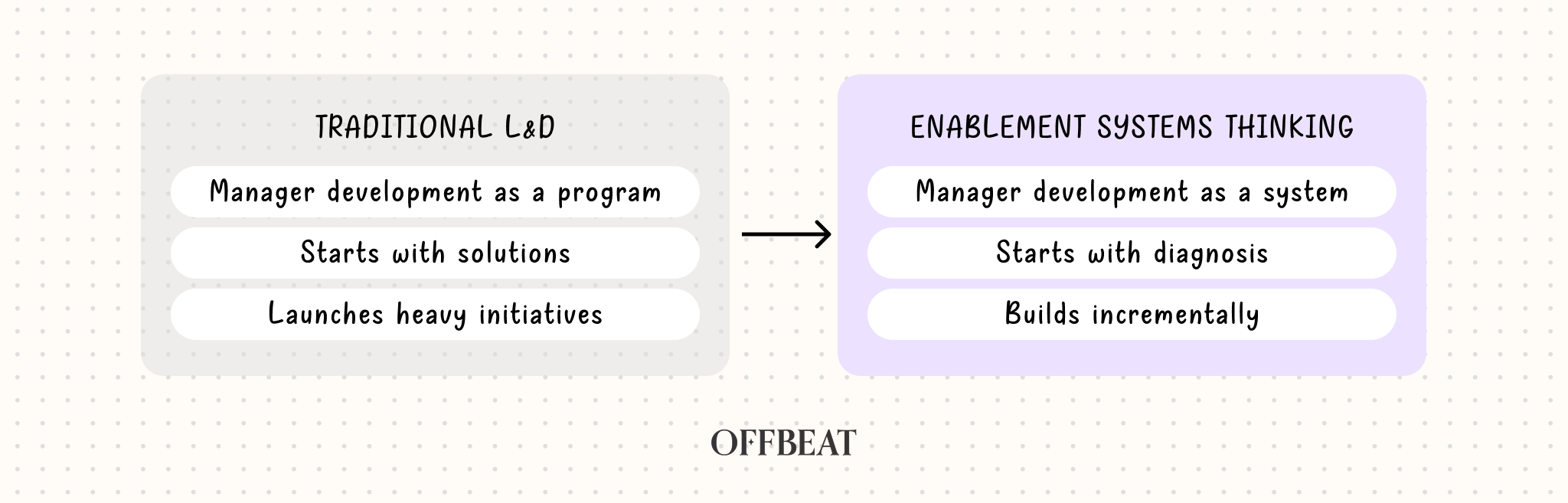
That's the argument Drew Fifield has been making throughout his career at companies like Meta, Nike (Converse), and, most recently, Axonius. His approach challenges the traditional L&D playbook by treating manager development not as a training problem, but as a systems problem.

We sat down with Drew to understand how he thinks about manager enablement, what makes it different from traditional development approaches, and how to actually build systems that help managers get better at their jobs.

From development to enablement: a fundamental shift

The distinction between development and enablement might seem semantic, but for Drew, it represents a complete reimagining of how L&D teams should operate.

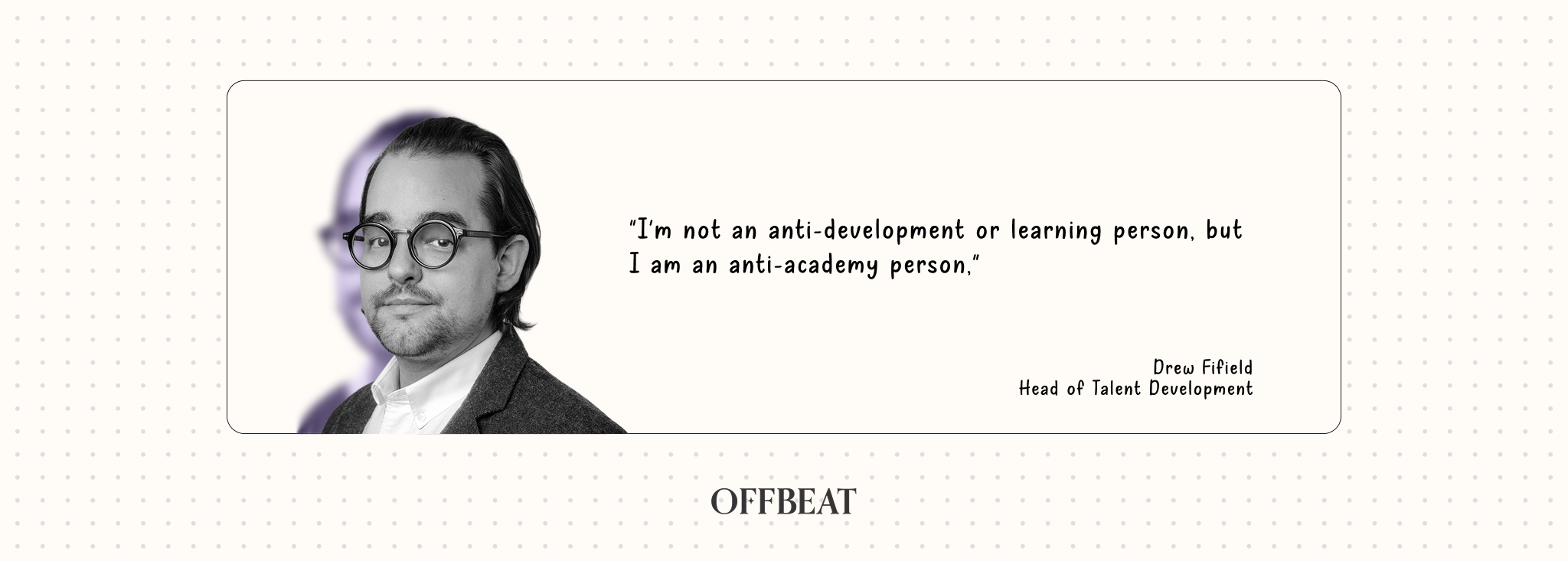
"I'm not an anti-development or learning person, but I am an anti-academy person," he explained. The problem isn't learning itself, but the assumption that learning programs, delivered in isolation, can solve manager performance challenges.
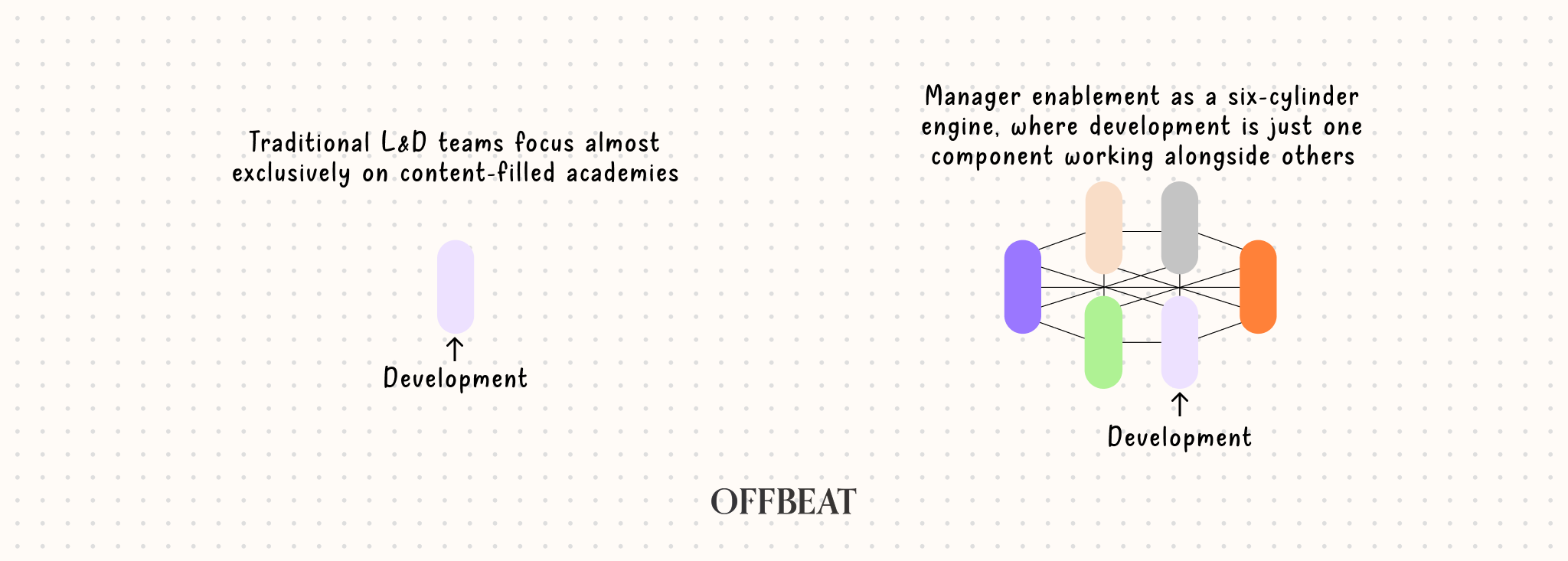
Traditional L&D teams focus almost exclusively on content-filled academies: workshops, courses, leadership programs. But good content is just one cylinder in a much larger engine. And when you only focus on that single cylinder, the engine doesn't run well, no matter how perfectly tuned that one piece might be.

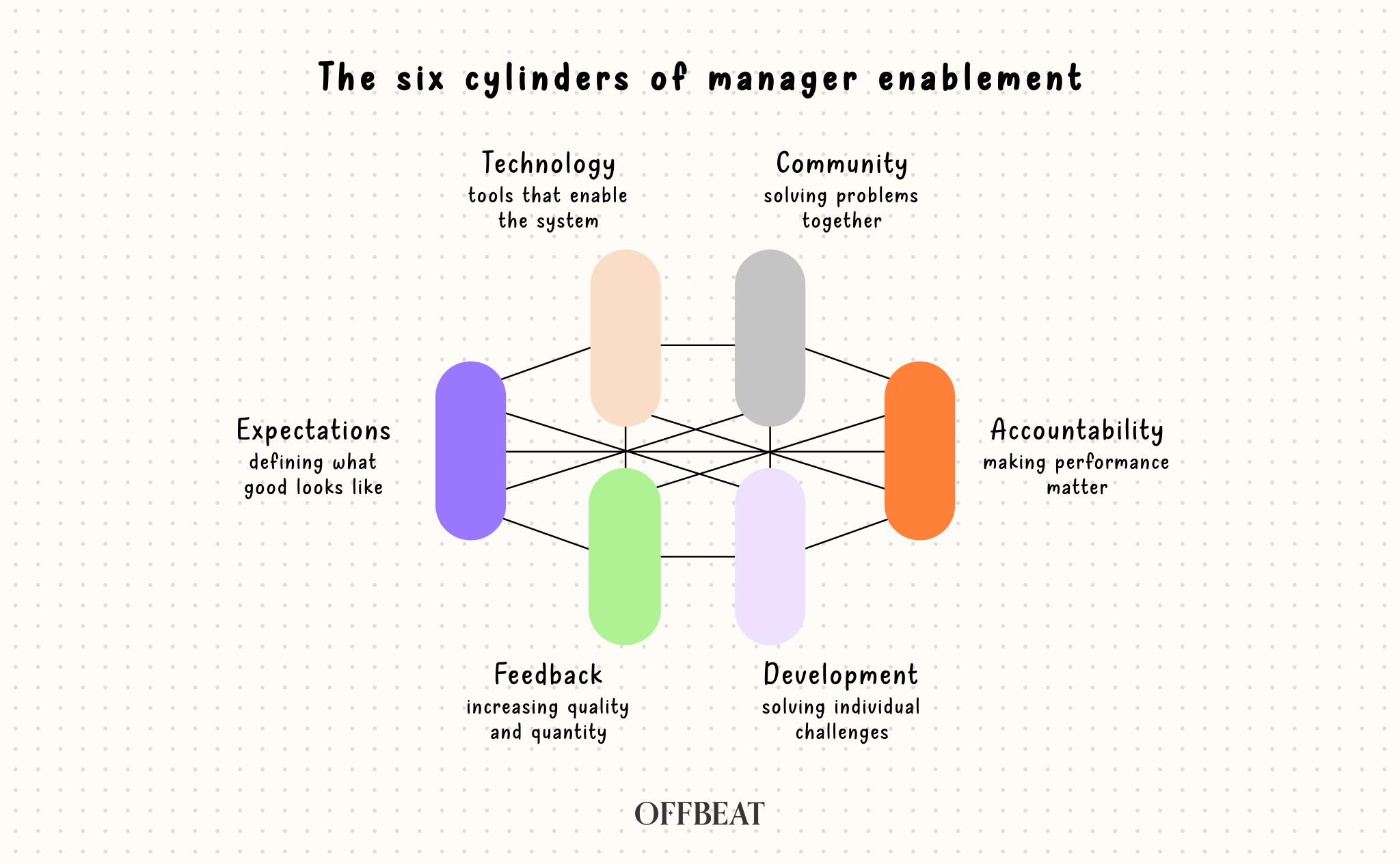
Drew thinks of manager enablement as a six-cylinder engine, where development is just one component working alongside expectations, feedback, accountability, community, and technology. "You can get moving if you've got three of these working," he said. "But thinking of them one at a time, thinking just about the content won't solve the manager problems that I know companies are trying to solve."
This systems thinking approach, borrowed from sales enablement and go-to-market teams, and grounded in social cognitive theory, addresses the reality that manager performance isn't just about what managers know. It's about what they're expected to do, what feedback they receive, how they're held accountable, who they can learn from, and what tools support their work.

The six cylinders of manager enablement

Drew’s framework breaks manager enablement into six interconnected components. Not all need to run at perfect efficiency simultaneously, but you need at least a few working together to create momentum.
Expectations: defining what good looks like

The foundation starts with clarity. 

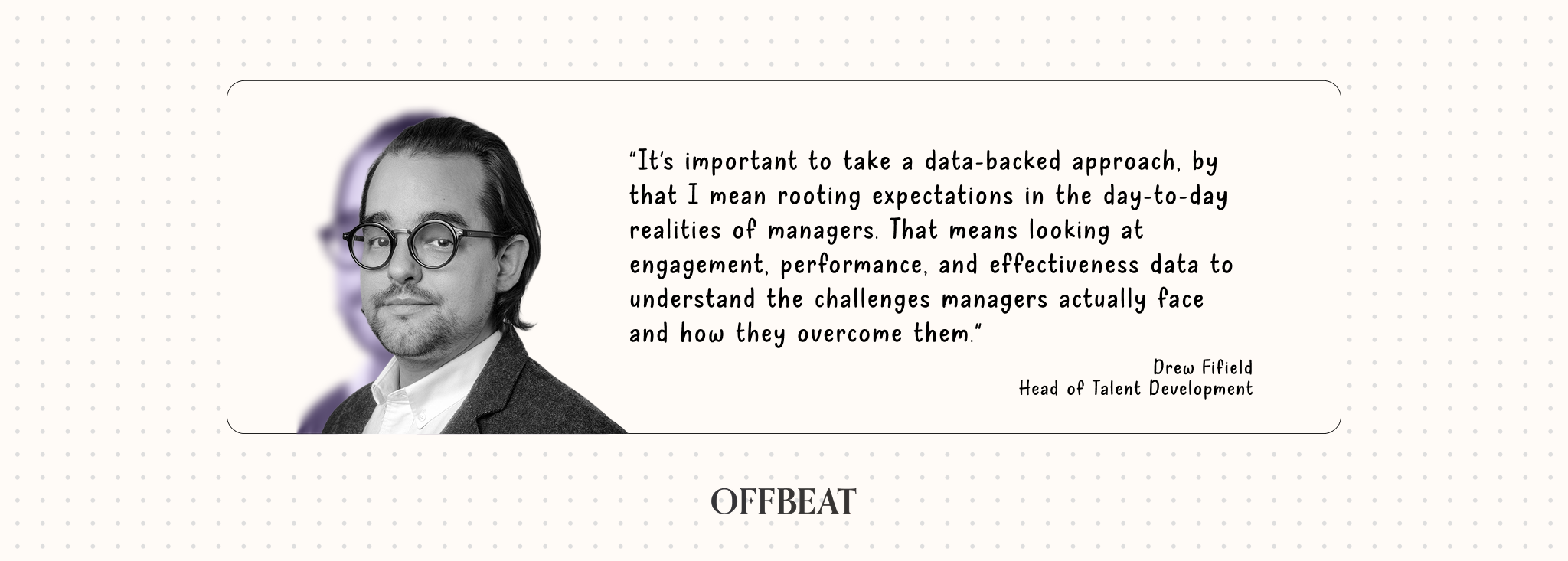
For managers, this means explicitly defining what good management looks like at your company. Not generic leadership competencies, but specific expectations tied to your organization's context and values. “It's important to take a data-backed approach, by which I mean rooting expectations in the day-to-day realities of managers. That means looking at engagement, performance, and effectiveness data to understand the challenges managers actually face and how they overcome them.”
At Nike, Drew spoke to managers with good business results and good people results about their managerial highs and lows at the company. “We used that data to define the habits of high-performing managers, a shared language of their expectations.”

At Axonius, Drew found that manager expectations were already in place and clear enough to build on. The effort required to change them would have been greater than the impact, so he kept the existing framework. This kind of pragmatic assessment, understanding what's working well enough versus what needs urgent attention, is central to his approach.

Feedback: increasing quality and quantity

Once expectations are clear, managers need to know how they're performing against them. This is where most companies fall short.

When Drew joined Axonius, there was no manager feedback system at all. “When I joined, I asked what I often ask: ‘Do managers get direct feedback from their teams?’ and I heard what I often hear: ‘no, because most managers aren't ready to take action on that feedback.’ 

The logic, when applied to any other function, wouldn't hold up. “You would never hire a finance director who wasn't able to take action on feedback about the quality of their analyses. And you would never hold back, pointing out the errors and how to correct them.” Yet it's exactly how many companies approach manager feedback. They worry managers aren't ready to receive it, so they avoid giving it entirely.

Drew’s goal isn't perfection but progress: "How do we increase the quality and quantity of feedback that managers receive about their performance against those expectations?" Sales enablement teams understand this instinctively. L&D teams need to adopt the same mindset.

"It's just like training an AI model. As the more data managers have, the more they can improve their outcomes."

Development: solving individual challenges

Development is critical, but it has to work differently than most L&D teams approach it.

"What development has to be is specific to the challenge that that individual is facing, and that’s different from the challenge that the company's facing, or that the team is facing," Drew explained. 

This means moving away from static workshops and templatized content designed for entire manager populations toward more targeted, personalized interventions.

At Converse, this looked like group coaching labs that were "part learning, part diagnosis" where managers worked through feedback they received from their team. "We weren’t just talking theoretically about feedback, we were reflecting on and analyzing feedback in their  hands, right in front of them."

At Axonius, Drew created a Gemini-powered reflection tool paired with one-on-one manager coaching. "Those dollars were easy to find because I'm not paying for an LMS and I'm not running workshops," he said. "So those dollars are there in the company. I think we're just spending them in the wrong places."

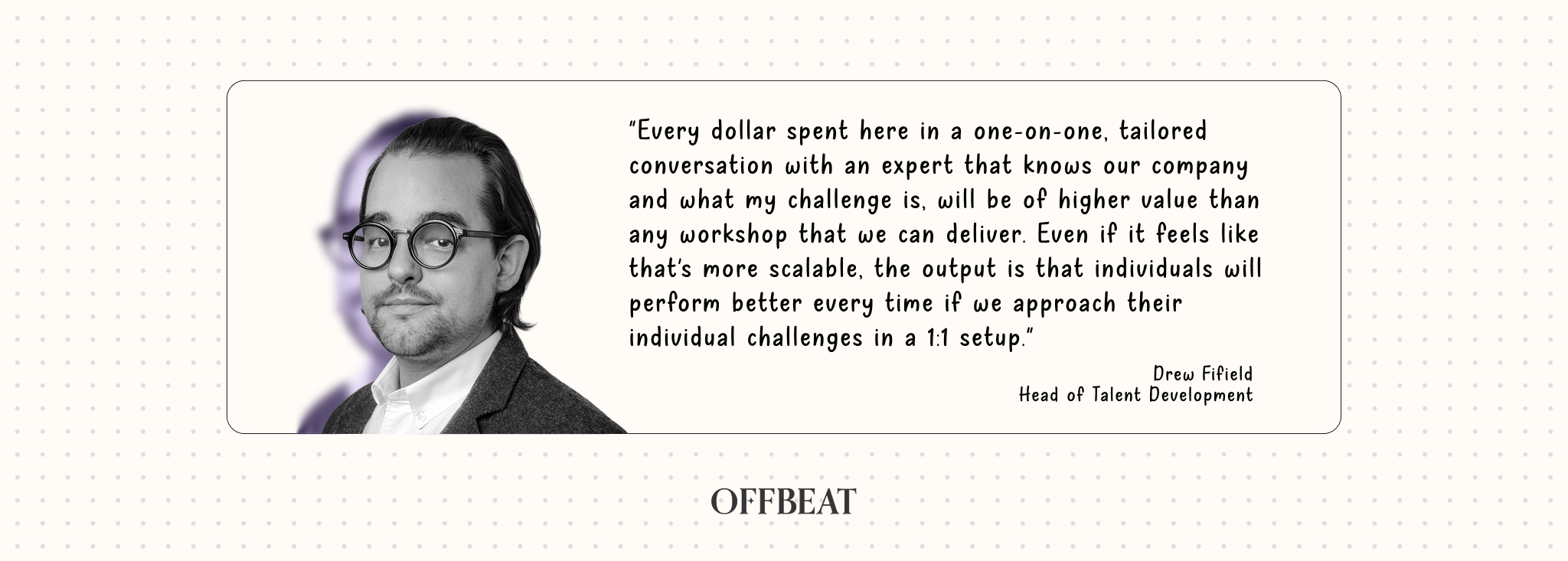
The investment thesis was straightforward: "Every dollar spent here in a one-on-one, tailored conversation with an expert that knows our company and what my challenge is, will be of higher value than any workshop that we can deliver. Even if it feels like that's more scalable, the output is that individuals will perform better every time if we approach their individual challenges in a 1:1 setup."
Does this mean workshops have no place? Not at all. But they need to be targeted to specific cohorts facing specific challenges.

At Axonius, Drew ran a workshop specifically for new managers who hadn't been part of the feedback system yet. "I knew exactly what their challenge was." The workshop got them familiar with expectations, included AI-powered role plays for practice, and connected them with coaches for targeted support. “That’s what the workshop looked like. It was still worthwhile; the investment made sense because it was tailored to a smaller group of managers who all shared the same challenge.”

Subscribe to Offbeat

Every Sunday we send over a pack of articles, e-books, podcasts, videos, and thoughts, to inspire you and help you stay up to date with what's happening within our L&D community

Awesome! Now, check your inbox
Oops! Something went wrong while submitting the form.

Accountability: making performance matter

Accountability, for Drew, means ensuring manager feedback actually influences how managers are evaluated. “For me, accountability means collecting upward manager feedback at the same time we evaluate their performance, so it can directly inform their performance review.”

This doesn’t have to be about creating rigid rubrics or manager effectiveness scoring systems. It's about ensuring the feedback loop is complete. Managers receive feedback, work on development, and then their progress is acknowledged in how they're assessed.

The term "accountability" itself can be tricky. "I can say that word with L&D folks, but that's not the word to use with leaders. It feels too punitive." The concept that managers are accountable for their business results and people results matters more than the label used.

Community: solving problems together

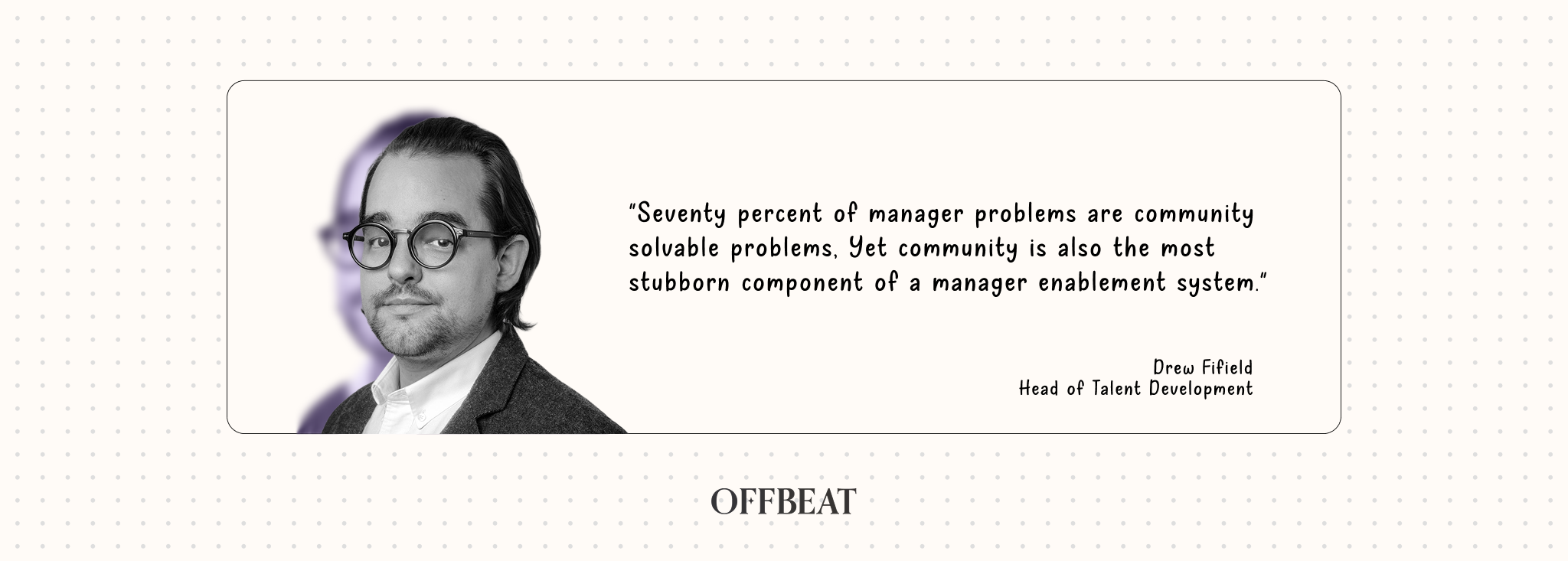
"Seventy percent of manager problems are community solvable problems," Drew noted. Yet community is also "the most stubborn component of a manager enablement system. I've seen only a few examples of that working really well."

The challenge is that while the concept is easy to grasp (managers helping each other), execution is remarkably difficult. You can't mandate community. You can create conditions for it, but it has to emerge organically.

The best example Drew saw was at Meta: “The tech managers group at Meta was one of the most active internal communities on Workplace (Meta’s Internal Communication Tool). No one told them to create the group, the engineering managers just did. And they used that space to work out solutions together about what to do when their people weren’t doing what they expected.”

At Axonius, the manager community was at a medium level when Drew arrived. They had biannual manager kickoff calls hosted by the CEO and a Slack channel. Not perfect, but present. Sometimes that's enough to build on.

Technology: tools that enable the system

Technology comes last for a reason. "L&D gets it wrong when they start with this component. I put it last because it has to help us scale the first five components across the company," Drew explained.

His philosophy on learning technology is deliberately minimalist. “My learning tech stack is like an iPhone home screen, just a few apps I know well. If I keep it to four or five tools with clear purposes, people won’t get confused or use the wrong one.”

The goal is clarity and purpose. Each tool should have a clear job to do in service of the other cylinders. Technology that exists for its own sake, like enterprise LMS platforms that become administrative burdens, can actively work against the enablement systems.

How to build a manager enablement system

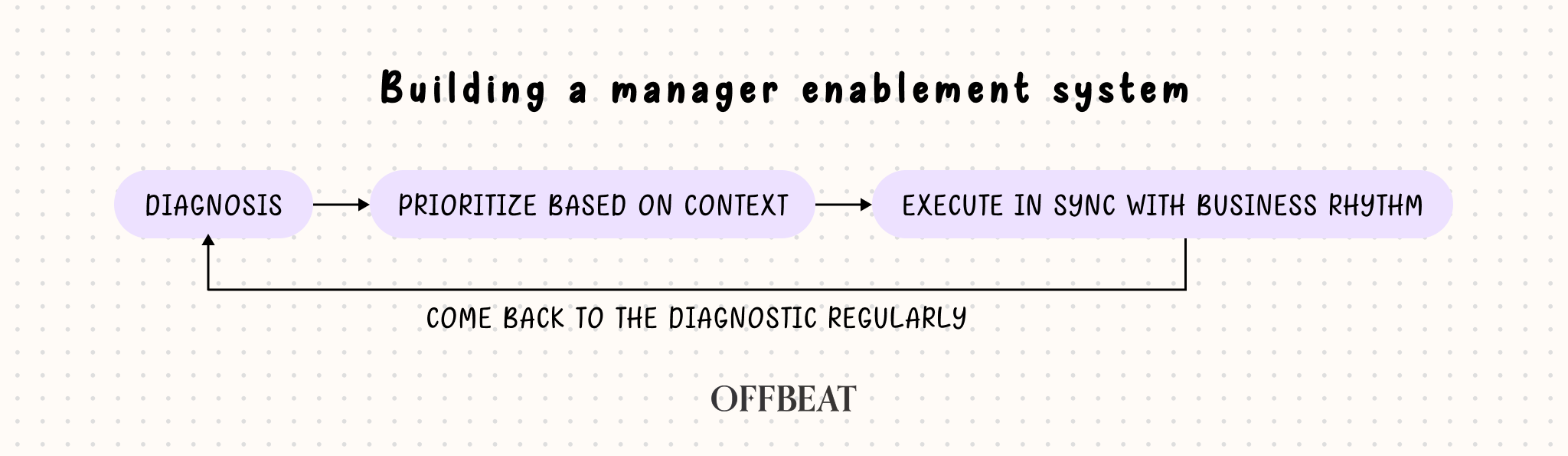
Understanding the six cylinders is one thing. Actually building a system is another. Drew follows a clear process that starts with diagnosis and moves through prioritization to execution.

Start with the diagnosis

Drew begins every new role with what he calls a "health check," though he's careful about terminology. "I don't use the word diagnostic, even with people in the HR team, because I think folks just misunderstand what that means."

The health check is structured, yet deliberately informal. He gathers data about each of the six components and measures the maturity of each on a spectrum (from ad hoc to strategic). The exact positioning on that spectrum matters less than creating a shared understanding with his internal stakeholders.

“I don’t run a full organizational diagnostic or create a detailed report; I gather just enough data to get a picture of what is happening. Then I share that initial analysis with my stakeholders. That sparks a conversation where the team can adjust the picture live and say, ‘No, we’re actually better at feedback,’ or ‘We’re further behind on manager community.’”

This collaborative approach serves two purposes. First, it creates buy-in because the team is actively shaping the assessment. Second, it surfaces information Drew couldn't have found alone.

The questions he asks are simple but revealing. When he spoke with executives at Axonius, he asked: "What's the biggest problem your managers face? Where are they getting stuck and what's stopping them?"

One response was direct, she said: "They don't get direct feedback. They're not getting it. And so they're not able to give it to their teams. So I don't think they're not talented, but I know they're not doing that part."

That single conversation clarified where to focus. The problem wasn't talent or capability. It was a missing feedback mechanism.

Prioritize based on context

Once you understand the maturity of each component (how each cylinder is performing), the next question is prioritization. Not everything needs to be a ten, and not everything can be worked on simultaneously.

At Axonius, the diagnostic revealed that expectations were in decent shape, development was low, community was medium, and feedback was essentially non-existent. Technology existed, but wasn't optimized.

The prioritization logic combined multiple factors: current state, desired state, effort required, and potential impact. "Feedback was low effort, high impact," Drew explained. They had existing tech (a performance management system) and clear expectations, so turning on manager feedback wouldn't require building new infrastructure.

But they also considered what would work well together. Feedback alone wouldn't solve everything. Managers needed to understand what to do with that feedback, which meant up-leveling manager development simultaneously.

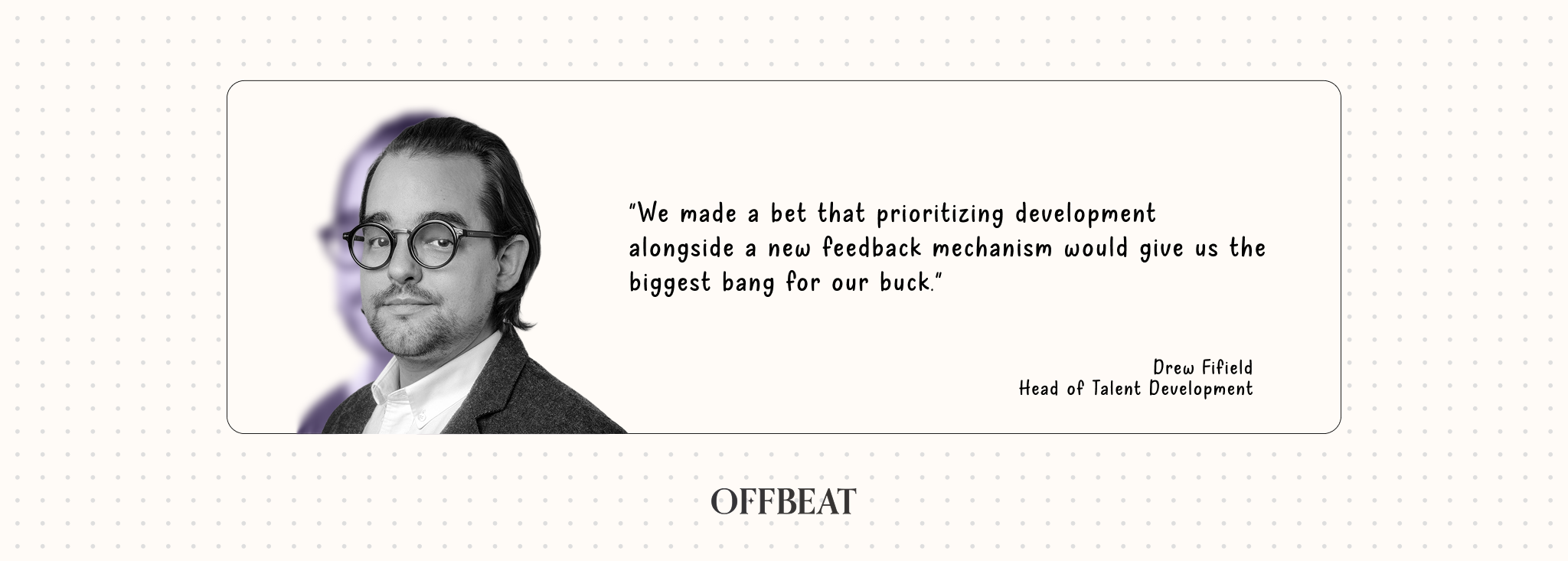
"We made a bet that prioritizing development alongside a new feedback mechanism would give us the biggest bang for our buck."

Execute in sync with business rhythm

Implementation isn't about creating new processes. It's about embedding into existing ones."You have to do the work in sync with the rhythm of the company," Drew emphasized. 

At Axonius, they looked at the performance cycle and realized it was the perfect moment to introduce manager feedback. "There was a performance cycle that was coming up, it was like a good moment to introduce a new feedback component of that cycle. And if managers got the feedback, then the next thing we wanted them to do was think about the development needed to improve."

This meant designing feedback and development interventions in parallel, so they launched as one integrated motion rather than separate initiatives rolled out months apart.

The specifics of execution varied by company. At Converse, the challenge was getting engagement with a new feedback process that had been designed for corporate Nike but didn't quite fit Converse's culture. The metric that mattered wasn't perfection but participation. "We took the approach of launching in sync with the Converse ethos, like branded marketing campaigns, live leader townhalls. We had more employees participating in this process than in any of the other Nike verticals. And employees recognized the impact and voted for the initiative to win a global impact award."

Come back to the diagnostic regularly

The diagnostic isn't a one-time exercise. It becomes a living scorecard that you return to at regular intervals aligned with your company's rhythm.

"That maturity map is something that you go back to, and you revisit," Drew explained. "You bring that tool back, you collectively mark progress."

This creates a space and shared language for talking about trade-offs to the enablement approach. Maybe one cylinder was running well, but now needs less investment. Maybe a different one has become more critical. The framework lets you have those conversations explicitly rather than implicitly.

What to let go of

Building a manager enablement system isn't just about what you add. It's also about what you stop doing.

"Part of it is letting go of things as well. Shedding parts of the typical L&D function that I think we don't really need," Drew said.

For him, that means not administering enterprise LMS platforms ("I'm not a tech team"), not managing editorial calendars of learning communications ("I don't want a marketing and comms coordinator"), and not running company-wide manager lunch & learns  (“I won’t do them unless they solve a real problem managers are facing.”).

The time and dollars saved from those activities are invested in more targeted interventions like one-on-one coaching. It's not about doing less. It's about doing different things that have more impact.

Stakeholder management: meeting people where they are

One of the most challenging aspects of building enablement systems is working with stakeholders who have different levels of engagement and different beliefs about development.

"Some leaders are big believers in development," Drew acknowledged. "They're proactive, engaged, and want to co-create with you. Others think their teams should just figure things out on their own. You have to be ready for both."

His first step is simple: ask how they want to be involved. "Some want a one-hour meeting to walk through everything. Others just want an email summary. Just ask. Meet them where they are."

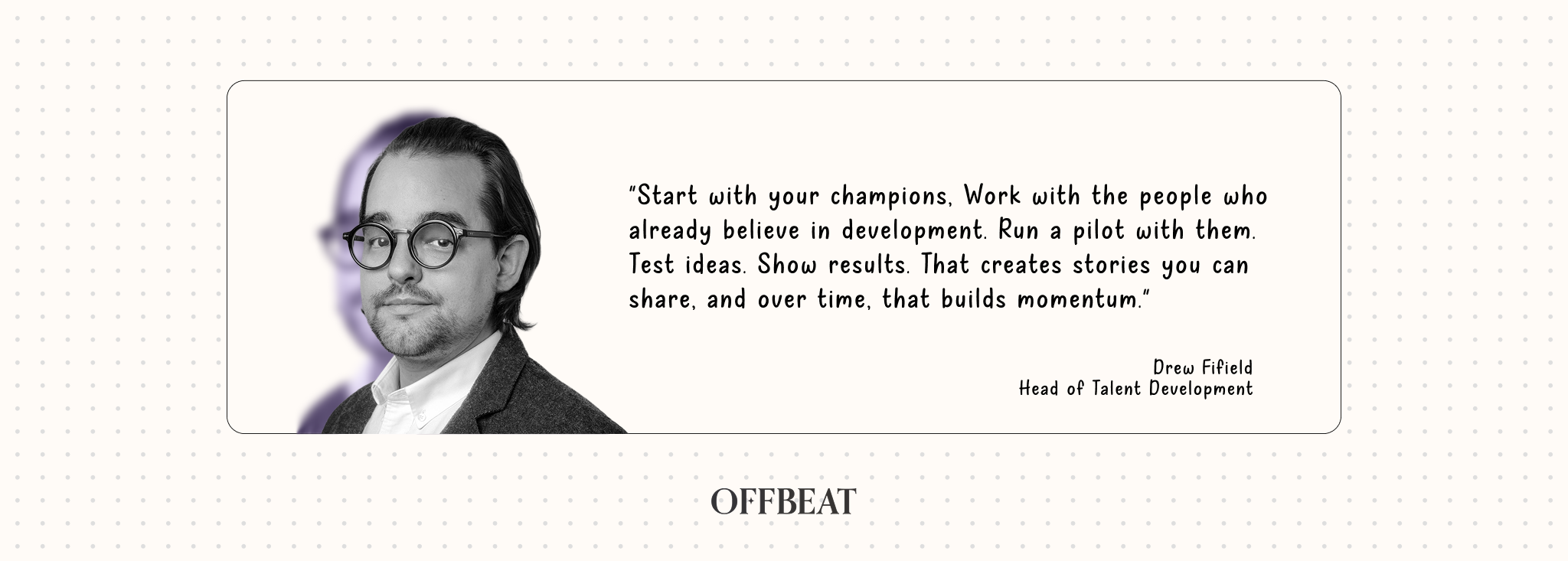
Drew doesn't try to win everyone over at once. "Start with your champions," he advised. "Work with the people who already believe in development. Run a pilot with them. Test ideas. Show results. That creates stories you can share, and over time, that builds momentum."

Those small wins create ripple effects. "When leaders see their peers having success with development, it opens the door to deeper conversations later."

The hardest parts

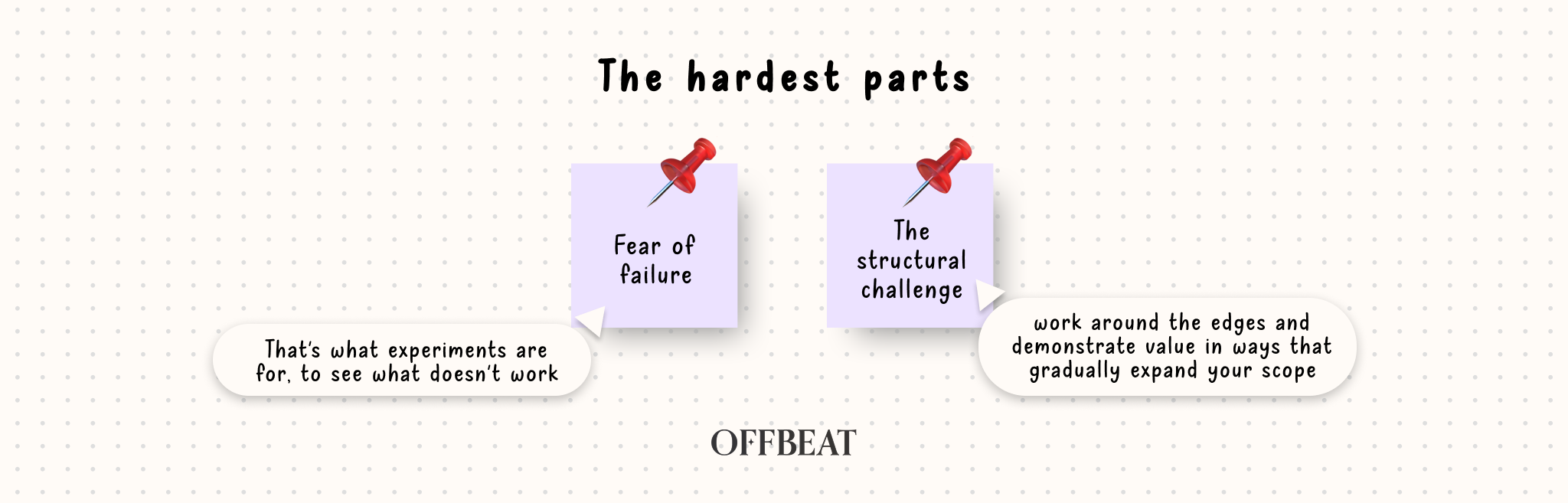
When asked what holds L&D teams back from this kind of systems thinking, Drew pointed to fear. "No one wants to fail in public," he said. "But that's what experiments are for, to learn what doesn't work. If everything works, you're probably not taking enough risks."

The other challenge is structural. These components of a manager enablement system don't always sit under L&D's control. Expectations might be owned by talent management. Performance processes by HR operations. Technology by IT.

"You have to define what the umbrella is," Drew said. At some companies, everything falls under a unified talent success function. At others, L&D teams need to work across boundaries and influence without direct authority.

“For me, I try not to get stuck thinking in terms of strict functions. And yes, L&D won’t control everything, and what I’m describing won’t work the same way in every company.”

The more rigid organizational structures are, the harder this becomes. But even in rigid structures, you can work around the edges and demonstrate value in ways that gradually expand your scope.

What success looks like

The metrics for manager enablement systems vary based on what you're trying to solve. At Converse, success meant engagement because that was the biggest barrier. At other companies, it might be retention, promotion rates, or team performance metrics.

Drew thinks about leading and lagging indicators. Feedback quantity and quality are leading indicators. Team retention and performance are lagging indicators. "We want to think about both at the same time."

But he's also realistic about measurement. "Engagement isn't gonna be right for us forever. But that was the tool that we used then because that was the challenge we're trying to solve."

The danger is optimizing for the wrong metrics or getting trapped in measurement approaches that don't reflect the actual system you're building. Sometimes the most important indicator is qualitative: are managers having better conversations? Are they asking for help when they need it? Are they using feedback to actually change behavior?

Why this matters now

The shift from traditional L&D to enablement systems thinking matters more than ever because the problems companies face with managers are getting more complex, not simpler.

Hybrid work, distributed teams, changing expectations around leadership, and increased scrutiny on management quality. These aren't problems that another workshop can solve.

Drew’s approach offers a different path. One that treats manager development as a system rather than a program. One that starts with diagnosis rather than solutions. One that builds incrementally rather than launching comprehensive initiatives that collapse under their own weight.

"You can work efficiently on the wrong things," Drew noted. "That's why the diagnosis is the most critical part of the strategy."

The question for L&D teams isn't whether to adopt this approach wholesale. It's whether the current approach, the academies, and workshops, and programs, is actually solving the manager challenges their companies face.

If not, it might be time to think about cylinders instead of courses.

LAVINIA MEHEDINTU

CO-FOUNDER & LEARNING ARCHITECT @OFFBEAT

Lavinia Mehedintu has been designing learning experiences and career development programs for the past 12 years both in the corporate world and in higher education. As a Co-Founder and Learning Architect @Offbeat she’s applying adult learning principles so that learning & people professionals can connect, collaborate, and grow. She’s passionate about social learning, behavior change, and technology and constantly puts in the work to bring these three together to drive innovation in the learning & development space.

Meet Offbeat

We’re the place where L&D professionals accelerate their career. Live programs, mentorship, lots of practice and knowledge sharing.

A diverse learning community

Curated learning resources

Personalized guidance in your learning journey

Weekly live sessions

Cohort-Based Programs run by experts

1:1 mentoring relationships

Become an Offbeat Fellow →

Copyright Offbeat 2023